"The Senior Care Influencer", Host of All Home Care Matters, and author of Caregiving in America
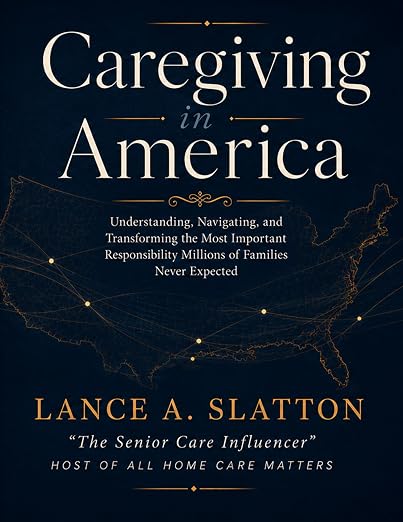
A Comprehensive Guide for America’s Family Caregivers
Caregiving can begin with a phone call, a diagnosis, a fall, a hospital discharge, or the gradual realization that someone you love can no longer manage alone. Suddenly, families are expected to make decisions about health care, home care, dementia, finances, legal planning, long-term care, safety, grief, and quality of life — often without a roadmap.
In Caregiving in America, Lance A. Slatton brings together practical guidance, real-world caregiving experience, trusted resources, checklists, worksheets, and perspective designed to help families understand what comes next, ask better questions, find support, and make more informed decisions throughout the caregiving journey.
63 Million
Nearly 1 in 4 adults are family caregivers right now.
Source: AARP & National Alliance for Caregiving, Caregiving in the U.S. 2025
$7,242
The average family caregiver pays $7,242 out of pocket each year.
Source: AARP, Caregiving Out-of-Pocket Costs Study
$1.01 Trillion
The annual economic value of family caregiving in America.
Source: AARP, Valuing the Invaluable 2026
1 in 3
Caregivers have children while caring for an adult loved one.
Source: AARP & National Alliance for Caregiving, Caregiving in the U.S. 2025
Family caregiving is rarely one decision. It is a series of decisions that can change from week to week — and sometimes from hour to hour. Families may need to understand a new diagnosis, coordinate medical appointments, evaluate home care, prepare a safer living environment, manage medications, navigate Medicare or Medicaid, explore veterans’ benefits, talk with siblings, plan for future care, respond to a crisis, or simply figure out how to get through the next day.
Caregiving in America was created to help bring those moving pieces together. Rather than treating caregiving as a single issue, the book looks at the larger journey: the emotional realities, the practical responsibilities, the systems families encounter, the choices they may need to make, and the resources that can help them move forward with greater confidence.
The result is a wide-ranging caregiving resource for people who are already providing care, preparing for what may be ahead, or trying to support someone they love without knowing where to begin.
Caregivers are often handed enormous responsibility with little preparation. They may be expected to understand medical terminology, insurance rules, discharge instructions, legal documents, care settings, safety concerns, family dynamics, and financial consequences while also coping with fear, exhaustion, uncertainty, and grief.
Caregiving in America is designed to reduce that feeling of being dropped into an unfamiliar world. It helps readers identify the questions they may not yet know to ask, understand the different types of support that may be available, and think through decisions before a crisis forces those decisions to be made for them.
The book also recognizes something families often forget: caregiving is personal. No two families, diagnoses, financial situations, relationships, or care journeys are identical. The goal is not to prescribe one “right” way to care. The goal is to help families become better informed, better prepared, and better supported.
What to do when caregiving begins unexpectedly and how to organize the first critical decisions.
Recognizing when additional help may be needed and how needs can evolve over time.
Practical education for families navigating memory loss, behavior changes, safety, communication, and care planning.
Understanding the role of non-medical home care, home health care, private caregivers, and the questions families should ask providers.
Coordinating care, communication, safety, and decision-making when the caregiver does not live nearby.
Preparing for discharge, avoiding gaps in care, and understanding what families may need once a loved one returns home.
Understanding the differences and evaluating options based on individual needs.
Helping families understand common financing pathways and where to seek qualified guidance.
Including information that can help eligible veterans and surviving spouses explore support such as Aid and Attendance.
Powers of attorney, guardianship considerations, advance directives, Five Wishes, and other planning conversations.
Navigating siblings, changing roles, decision-making disagreements, boundaries, and the emotional strain caregiving can cause.
Balancing employment with care responsibilities and understanding resources such as the Family and Medical Leave Act where applicable.
Understanding anticipatory grief, loss before and after a loved one dies, and preparing for the transition that follows.
Recognizing caregiver stress, burnout, guilt, and compassion fatigue, including when additional support or respite may be needed.
Practical tools readers can return to as circumstances change.
Caregiving in America is written for more than the person who already identifies as a “caregiver.” It is for the daughter noticing that her mother is forgetting appointments. The husband learning how to support a spouse after a diagnosis. The adult son trying to coordinate care from another state. The family debating whether home is still safe. The working caregiver stretched between a job, children, and aging parents. The friend, neighbor, advocate, or professional trying to help a family understand its options.
It is also for families who want to prepare before a crisis. Planning early can create more choices, reduce pressure, and make difficult conversations easier to have while the person receiving care can still participate in them.
Caregiving decisions are easier when important information is organized. Throughout Caregiving in America, readers will find practical tools intended to turn information into action — including checklists, self-assessments, worksheets, questions to ask, planning prompts, and resources that can be revisited as care needs change.
These tools are designed to help caregivers prepare for conversations with physicians, hospitals, home care agencies, senior living communities, attorneys, financial professionals, insurers, family members, and other people who may become part of the care team.
Lance A. Slatton’s work in caregiving did not begin as a media project or a professional title. It became personal when a serious medical crisis involving his father turned what was expected to be a short period of help into nearly three years of intensive family caregiving.
That experience changed the direction of his life and shaped the questions at the center of this book: Why do so many families enter caregiving without knowing what resources exist? Why are caregivers expected to navigate complex systems while under enormous emotional pressure? And how can families be better prepared before they reach a breaking point?
Caregiving in America combines that lived experience with more than two decades in health care, senior care, home care, caregiving education, advocacy, and conversations with caregivers, clinicians, researchers, authors, innovators, policymakers, and leaders across the aging and long-term care landscape.
“Caregiving changes families long before most families ever think to call themselves caregivers. The more we can help people understand what may be ahead, the better chance they have to make decisions from a place of preparation instead of crisis.”
Lance A. Slatton is a nationally recognized voice in caregiving and senior care, known as “The Senior Care Influencer.” He is the founder and host of All Home Care Matters, an award-winning platform focused on caregiving, aging, dementia, home care, and long-term care education, and he serves as President of AlzAuthors, a global community and resource dedicated to books and education about Alzheimer’s disease and dementia.
With more than 20 years of experience in health care and senior care, Lance is also a co-founder and Senior Case Manager of Enriched Life Home Care Services, where he has worked directly with older adults, individuals living with chronic conditions, and families navigating care at home.
His work has been shaped by both professional experience and his own family caregiving journey. Through his books, interviews, advocacy, speaking, and media work, Lance focuses on helping caregivers find trustworthy information, understand their options, and feel better equipped to navigate the realities of caregiving.
He is also the author of The All Home Care Matters Official Family Caregiver’s Guide, an award-winning resource for family caregivers.
Caregiving in America by Lance A. Slatton is available in print and digital formats through major booksellers. Choose the format and retailer that works best for you.
The book is written for family caregivers, adult children of aging parents, spouses and partners, long-distance caregivers, families navigating dementia or Alzheimer’s disease, and anyone who wants to prepare for future caregiving responsibilities. It can also be useful to care professionals who want a broad view of the questions and pressures families encounter.
Whether caregiving has already become part of your life or you are trying to prepare for what may come next, Caregiving in America was created to help you understand the journey, organize the decisions ahead, and find the resources and support that can make the responsibility more manageable.
Start with the question in front of you today. Keep the book nearby for the questions that come tomorrow.